[from MercoPress, 28 June 2011]
Argentina promises to end fluvial obstacles to land-locked Paraguayan trade
Foreign Affairs minister Hector Timerman in Asuncion for the Mercosur summit promised on Tuesday Argentina will put an end to fluvial obstacles to Paraguayan trade. Landlocked Paraguay trades with the rest of the world through the Parana River, most of which crosses Argentine territory.
“We are trying to solve the issue”, said Timerman in an interview with several Paraguayan television channels before the Common Market Council meeting that normally precedes the Mercosur summit, and brings together Foreign Affairs and Economy ministers and central bank governors.
“We are doing our best and I can assure you we’ll find a solution” said Timerman. Paraguayan trade and industrial organizations claim Argentine unions sponsored by Argentine business interests have been blocking trade along the Paraná River alleging “labour conflicts”.
In the eve of the Mercosur summit, several business organizations from Paraguay made statements claiming the South American trade group has proven to be a ‘fiasco’ because of the reiterated obstacles and non-tariff impediments imposed by senior members Argentina and Brazil to inter-region trade.
Paraguayan Foreign Affairs minister Jorge Lara Castro hosting the meeting said that ministers from the four full Mercosur members will be accompanied during the meeting by representatives from associate members Chile, Peru, Ecuador, Bolivia and Colombia and from Mexico and Japan.
Meanwhile from Buenos Aires it was announced that President Cristina Fernández de Kirchner suspended her trip to Asunción for the Mercosur summit, after being advised against travelling by her doctors due to the head injury she suffered last Wednesday.
“After the fall the President suffered last Wednesday, in which she suffered a small head injury, the Presidential Medical Unit has advised the head of State to not travel by airplane for the moment, as a precautionary measure. However, the President will continue with her daily activities,” said an official representative.
The statements were confirmed by the Presidential Medical Unit doctor, Marcelo Ballesteros.
The President “will however continue with planned activities, attending a ceremony presenting a new security plan Tuesday afternoon”, said the report.
Nevertheless the Argentine presence will not be diminished since the running mate of Cristina Fernandez de Kirchner for next October presidential election, Economy minister Amado Boudou is participating of the Mercosur deliberations.
Showing posts with label geography. Show all posts
Saturday, July 2, 2011
Tuesday, June 21, 2011
Puyehue's pumice & ash
[from The Atlantic, 17 June 2011]
Volcanic Ash and Pumice From Puyehue
Though the eruption at Chile's Puyehue-Cordon Caulle volcano chain has diminished slightly since it began on June 4, it continues to wreak havoc both near and far. Ash and floating pumice stones are choking nearby lakes and rivers, threatening to damage dams or cause flooding. Resort areas in Argentina that would normally be preparing for ski season are digging themselves out from under a blanket of ash, trying to restore water and power services knocked out by the volcano. Evacuated ranchers are worrying about the livestock they left behind without grazing pasture. Puyehue's ash cloud has already circled the globe, high in the atmosphere, disrupting air traffic as far away as Australia and New Zealand.
See 32 more photos here.
Volcanic Ash and Pumice From Puyehue
Though the eruption at Chile's Puyehue-Cordon Caulle volcano chain has diminished slightly since it began on June 4, it continues to wreak havoc both near and far. Ash and floating pumice stones are choking nearby lakes and rivers, threatening to damage dams or cause flooding. Resort areas in Argentina that would normally be preparing for ski season are digging themselves out from under a blanket of ash, trying to restore water and power services knocked out by the volcano. Evacuated ranchers are worrying about the livestock they left behind without grazing pasture. Puyehue's ash cloud has already circled the globe, high in the atmosphere, disrupting air traffic as far away as Australia and New Zealand.
| A cow is covered by wet ash in Villa La Angostura |
See 32 more photos here.
Saturday, June 18, 2011
Penny from Cafayate
What is Cafayate like in late autumn/winter?
I drove through the Quebrada in late afternoon, and the trip was nothing less than spectacular. The light was warmer and, on two occasions, I had to stop the car and gasp as the mountains seemed lit from within. The washouts on the road from the heavy rains are yet to be fixed and, it appears that, in a couple of locations the diversions will become permanent.
Again, the wonderful autumn light compensated for the lack of greenery in Cafayate. Early mornings were very cool, and the sun did not rise over the east mountains until after 8 o'clock. The temperature reached the mid 20s C, but the sun was not searing as it can be in the summer. I was able to eat outside in the evening and was comfortable with a sweater. I loved it – just as I loved BA at this time of year.
Much renovation going on in town, and I noticed a soon to open rest/bar by the name of Mythos just down from Wine Museum. Sounds like souvlaki to me!
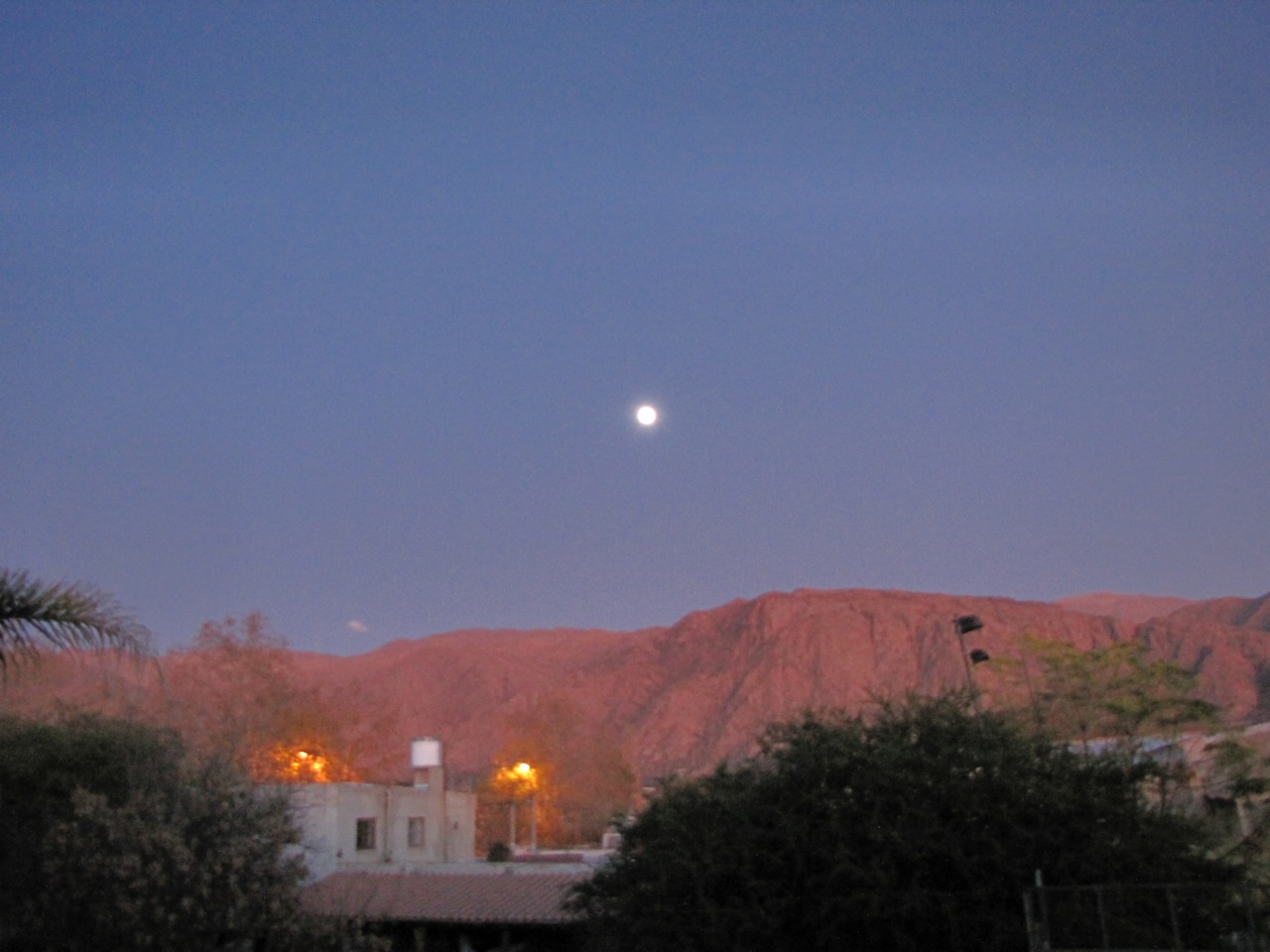
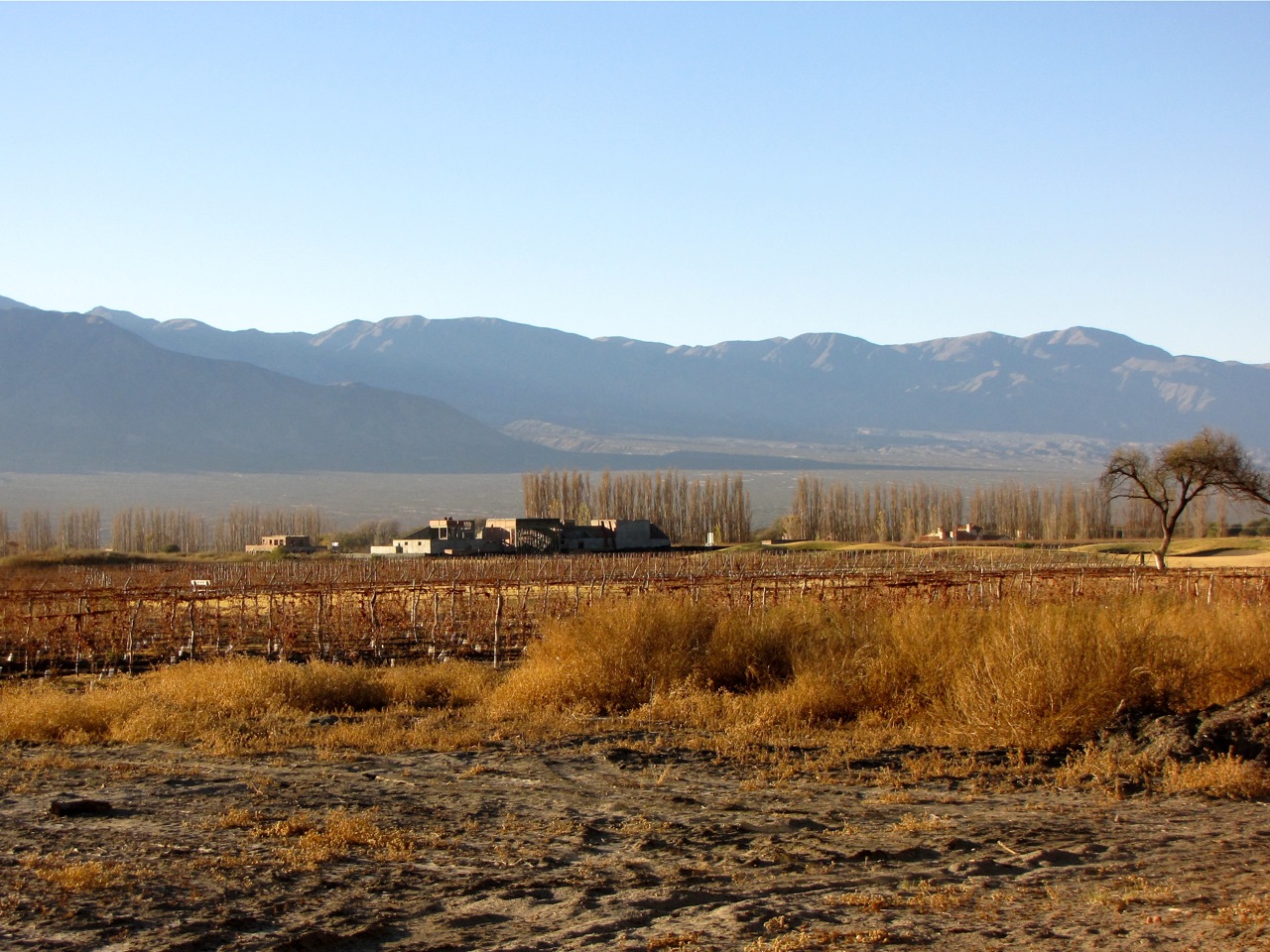
I leave you with 2 photos and promises of more to come after the weekend.
I drove through the Quebrada in late afternoon, and the trip was nothing less than spectacular. The light was warmer and, on two occasions, I had to stop the car and gasp as the mountains seemed lit from within. The washouts on the road from the heavy rains are yet to be fixed and, it appears that, in a couple of locations the diversions will become permanent.
Again, the wonderful autumn light compensated for the lack of greenery in Cafayate. Early mornings were very cool, and the sun did not rise over the east mountains until after 8 o'clock. The temperature reached the mid 20s C, but the sun was not searing as it can be in the summer. I was able to eat outside in the evening and was comfortable with a sweater. I loved it – just as I loved BA at this time of year.
Much renovation going on in town, and I noticed a soon to open rest/bar by the name of Mythos just down from Wine Museum. Sounds like souvlaki to me!
I leave you with 2 photos and promises of more to come after the weekend.
![]() |
| 8 am, Hotel Killa, Cafayate |
![]() |
| fitness club from Penny's place (N-19) |
Saturday, May 21, 2011
Chile's Atacama Desert
[from Laura Fraser @ Los Angeles Times, 21 May 2011]
Chile's Atacama Desert: Otherworldly and timeless
There are plenty of wonders in this most inhospitable of places: steaming geysers, hoodoos, volcanoes, Saharan landscapes. The town of San Pedro de Atacama is a convenient staging ground for outdoor treks and other adventures.
Reporting from San Pedro de Atacama, Chile— Only four people live in the village of Machuca, 13,000 feet up in the Chilean Andes, and all of them are related to Joel Colque. Colque, who grew up in this stone village that hugs the side of a volcano, is our guide for a daylong trek in the altiplano — the high rocky plateau — above the Atacama Desert, the driest spot on Earth, ringed by 19,000-foot volcanoes where rain evaporates long before it reaches the crusty salt flats far below.
We're shivering here on a June winter morning, the short alpine plants frozen sharp as needles.
Colque greets his aunts — squat women with long dark braids and colorful ponchos — who weave handicrafts and raise llamas to barbecue for visitors on their way to nearby steaming geysers or high mountain lagoons. They speak Quechua, the Inca language, as well as some Kunza, a nearly extinct language spoken in these northern Andes for centuries.
He tells us that his family has lived in this spot, in the shadow of the volcanoes, since the beginning of time. More recently, Colque's grandfather climbed the 19,409-foot Licancabur volcano to extract sulfur, and Colque has snowboarded down its slippery peak.
Colque belongs to this ancient world, as well as the world of San Pedro de Atacama, a small town and staging ground for outdoor adventures, full of camping gear stores, hostels, hotels and luxury resorts such as the Alto Atacama desert lodge, where he is the chief guide.
Read more here.
Chile's Atacama Desert: Otherworldly and timeless
There are plenty of wonders in this most inhospitable of places: steaming geysers, hoodoos, volcanoes, Saharan landscapes. The town of San Pedro de Atacama is a convenient staging ground for outdoor treks and other adventures.
| Licancabur volcano |
Reporting from San Pedro de Atacama, Chile— Only four people live in the village of Machuca, 13,000 feet up in the Chilean Andes, and all of them are related to Joel Colque. Colque, who grew up in this stone village that hugs the side of a volcano, is our guide for a daylong trek in the altiplano — the high rocky plateau — above the Atacama Desert, the driest spot on Earth, ringed by 19,000-foot volcanoes where rain evaporates long before it reaches the crusty salt flats far below.
We're shivering here on a June winter morning, the short alpine plants frozen sharp as needles.
Colque greets his aunts — squat women with long dark braids and colorful ponchos — who weave handicrafts and raise llamas to barbecue for visitors on their way to nearby steaming geysers or high mountain lagoons. They speak Quechua, the Inca language, as well as some Kunza, a nearly extinct language spoken in these northern Andes for centuries.
He tells us that his family has lived in this spot, in the shadow of the volcanoes, since the beginning of time. More recently, Colque's grandfather climbed the 19,409-foot Licancabur volcano to extract sulfur, and Colque has snowboarded down its slippery peak.
Colque belongs to this ancient world, as well as the world of San Pedro de Atacama, a small town and staging ground for outdoor adventures, full of camping gear stores, hostels, hotels and luxury resorts such as the Alto Atacama desert lodge, where he is the chief guide.
| Alto Atacama desert lodge & spa |
Read more here.
Tuesday, April 19, 2011
Abasto mall
| Abasto Shopping Mall on Corrientes |
The guards explained that it was a security measure. When I explained that we were moving to Cafayate, they said, "Calafate?" Lots of people do this, which surprises me some because Cafayate is SO much nicer, I'm guessing, than Calafate, but now I'm learning that people visit Calafate to see the glaciers.
| Petito Moreno glacier, Calafate, Patagonia |
The mall was like a US mall. We passed through & walked across the street to a combination asado & Chinese restaurant. The latter was quite good. I wish I could remember the restaurant name.
Owner Susan Fujii adds:
I just have to add that if you have children, this particular mall is *paradise* for them as they have a wonderful Children's Museum (Museo de los Ninos) on the 2nd floor! It is far better than many, many US Children's Museums (and we've been to some very nice ones with our 5-year-old and 3-year-old) and features an enormous hands-on "city" where kids can do all sorts of fun things. My girls' favorites were singing, dancing, and operating the production cameras of a "real" TV studio, flushing themselves down the giant toilet slide, making milk and milk products in the dairy center, and grocery shopping (and being cashiers) in the awesome super-market.
It truly was amazing and lots of fun! Also the food court, unlike most in the US, sells wine and beer and has a great assortment of delicious restaurants.
And there was also a huge indoor amusement park there called "Neverland" complete with a hot-air-balloon ferris wheel ride, swinging pirate boat, and more, that we didn't have time to check out as we had to run to catch our plane (much to our girls' chagrin!).
Sunday, April 10, 2011
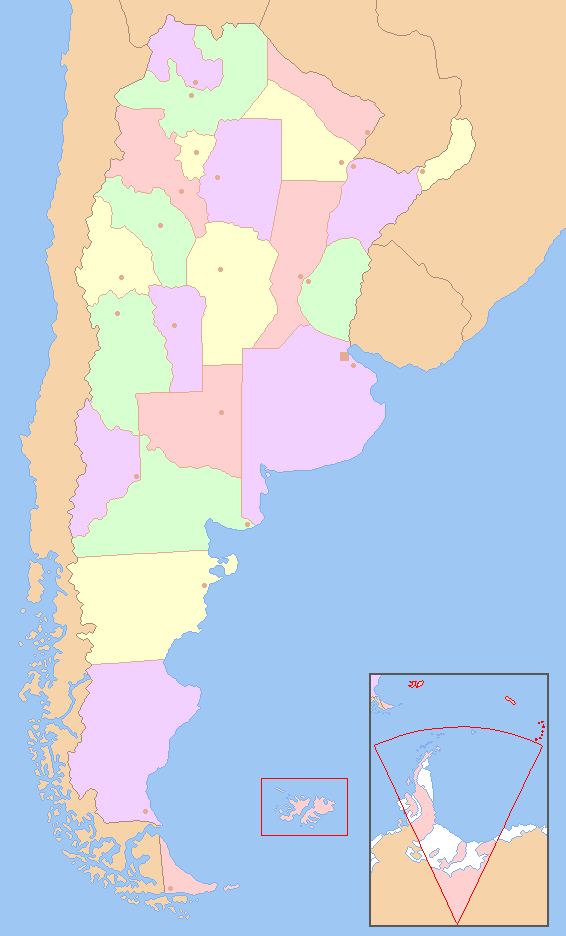
Argentine's provinces
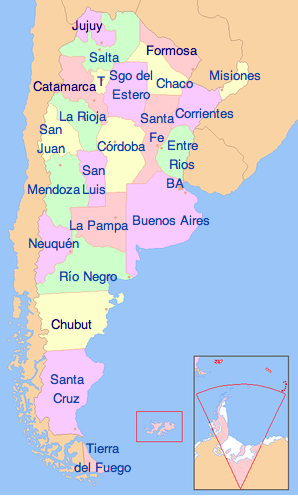
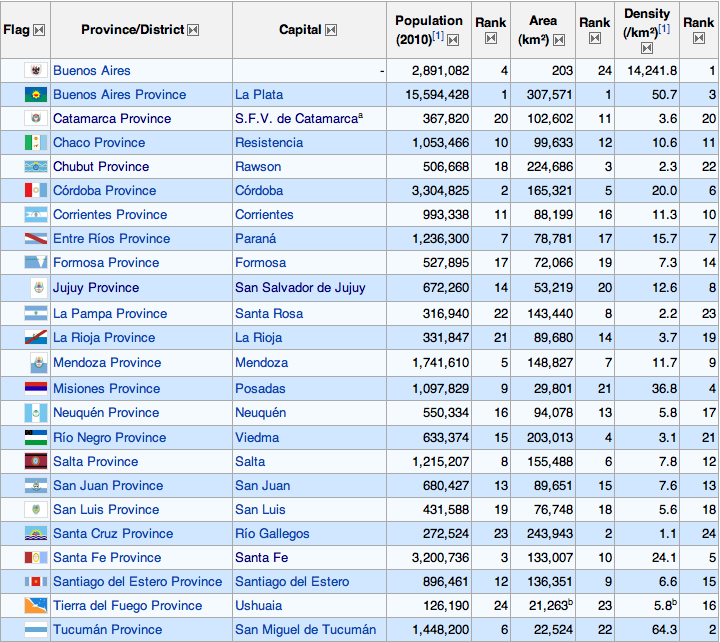
Argentina is divided into 23 provinces. Why not study the map & table below to learn them (click either one to enlarge).
Okay, now you can mark the blank map with what you've learned.
Saturday, April 2, 2011
GOCE discovers gravity
[from BBC Mobile, 31 March 2011]
new discoveries from the Gravity Field and Steady-State Ocean Circulation Explorer
![]() |
| yellow = strongest gravity; blue = weakest |
Friday, February 18, 2011
hanging out in Panama
What a trip to meet so many La Estancia folks in Panama at the Simon Black conference: Peter W, Charles V, John U, Jane & Kent R, Jim R, John & Margaret P, Deborah D, Reg & Tonye C., Carol C, Forrest B, plus Mike & I. Maybe a few more I don't know yet.
So far the conference has been good talks, good folks, good food. Hope we find answers to some of our questions.
Friday, January 21, 2011
the highest peak in the Americas
[from Latin American Herald Tribune, 21 January 2011]
Stranded Climbers Rescued from Argentina’s Aconcagua
BUENOS AIRES – A Spanish man and Argentine woman were rescued safe and sound Thursday from the slopes of Argentina’s Mount Aconcagua, the highest peak in the Americas, authorities said.
Though dealing with exhaustion, dehydration and minor injuries, Tomas Gomez, 31, and Belen Pedernera, 22, are in good shape, according to doctors who examined them at the foot of the mountain.
Aconcagua, known as the “Roof of the Americas,” is a 6,962-meter (22,840-foot) peak located in Mendoza province, some 1,000 kilometers (621 miles) west of Buenos Aires.
The climbers ran into trouble on the route leading to the Piramide summit and found themselves unable to proceed once they reached the 5,200-meter level, rescue team leader David Spinelli told radio stations.
“There have been a lot of avalanches on the Piramide summit. That route is very difficult and they didn’t know this,” Spinelli said of Gomez and Pedernera.
Authorities began the search Tuesday, after the climbers failed to return to their base camp on schedule.
The families of Gomez and Pedernera are awaiting their arrival in Mendoza city, the provincial capital.
Stranded Climbers Rescued from Argentina’s Aconcagua
BUENOS AIRES – A Spanish man and Argentine woman were rescued safe and sound Thursday from the slopes of Argentina’s Mount Aconcagua, the highest peak in the Americas, authorities said.
Though dealing with exhaustion, dehydration and minor injuries, Tomas Gomez, 31, and Belen Pedernera, 22, are in good shape, according to doctors who examined them at the foot of the mountain.
Aconcagua, known as the “Roof of the Americas,” is a 6,962-meter (22,840-foot) peak located in Mendoza province, some 1,000 kilometers (621 miles) west of Buenos Aires.
The climbers ran into trouble on the route leading to the Piramide summit and found themselves unable to proceed once they reached the 5,200-meter level, rescue team leader David Spinelli told radio stations.
“There have been a lot of avalanches on the Piramide summit. That route is very difficult and they didn’t know this,” Spinelli said of Gomez and Pedernera.
Authorities began the search Tuesday, after the climbers failed to return to their base camp on schedule.
The families of Gomez and Pedernera are awaiting their arrival in Mendoza city, the provincial capital.
Subscribe to:
Posts (Atom)