[from El Tribuno, 4 July 2011]
Almost no gas at Salta province gas stations (Casi no queda nafta en las estaciones de la provincia)
At many stations there is no gas at all. Others sell only a limited number of liters per vehicle (En muchas expendodores la falta es total. En otras se decidió vender con cupos limitados de litros por vehículo)
[Click here for a blog post in English about the issue]
[David says, "It happens every couple of years... Some trick the gas companies play to make a few extra bucks. It will blow over in a few days."]
Larguísimas filas (long lines) de autos y la paciencia que se va acabando tras un problema que se acentuó en las últimas semanas. Ese es el panorama que describe el desabastecimiento de combustible en la provincia. Falta nafta y ahora, en algunas estaciones de servicio, también está empezando a escasear gas.
Los conductores deben recorrer toda la ciudad para poder cargar nafta y continuar circulando con sus vehículos. El problema del gas aún no está tan acentuado. Ayer se estaba vendiendo casi con normalidad, salvo en algunas estaciones en las que había baja presión, motivo por el cual debió suspenderse la carga.
El Tribuno realizó una recorrida por las estaciones de servicio de distintos puntos de la ciudad.
En las que se estaba cargando nafta había gran cantidad de conductores esperando en sus autos para poder aprovisionarse de este combustible.
Las largas colas que hacía la gente se traducían en varias horas de espera que, en muchos casos, desataron enojos y peleas entre los clientes.
En algunas estaciones se vendió nafta de manera restringida, con cupos de $50 y, en otras, de hasta $100 por vehículo. Otra modalidad fue la restricción de la venta por turnos.
Los trabajadores de muchas de las estaciones de servicio que no contaban con el suministro de combustible dijeron ayer que estaban a la espera de la llegada de los camiones cisterna, por lo que hoy podrían estar ya brindando su servicio de manera totalmente normal.
“El tema estuvo muy complicado el fin de semana. Lo que pasa es que los camiones traen menos cantidad de nafta que antes y casi no tienen común, sólo súper y premium. Los clientes están obligados a comprar las naftas más caras y encima deben armarse de paciencia para hacerlo. Ahora, para colmo, también hay problemas con el gas, es realmente preocupante”, remarcó un empleado de YPF.
¿Dónde cargar?
Ayer estaban cargando nafta, gas y gasoil con normalidad en la YPF de Pellegrini y Coronel Vidt, en la Esso de avenida Bolivia y Miguel Ortiz, en La Rotonda de Limache frente al hipermercado Libertad, en la YPF de avenida Kennedy, en la YPF de Mitre y Rivadavia y en la YPF de Independencia 775. Los trabajadores de esas estaciones de servicio manifestaron que se prevé que hoy ya esté normalizada la situación de provisión de combustible.
Showing posts with label Salta. Show all posts
Monday, July 4, 2011
Thursday, May 26, 2011
Salta's failure to thrive
[from El Tribuno, 25 May 2011]
The Salta Province, as viewed through social indicators, is among the most fragile in Argentina & generally has the highest unemployment, as well as typical shortages of underdevelopment: housing, drinking water, sanitary services, etc. Add to this an enormous educational deficit: many Salteños haven't even finished elementary school & many are illiterate, the qualitative deficit due to insufficient public schools. In terms of sanitation, the situation is no less dramatic, with the appearance or reappearance of purportedly eradicated illnesses & "minor" problems, of the respiratory type, for example, with chronic symptoms, suffered by a large part of the population. Not to speak of the incontestable advance of drugs among youth, which can be seen by looking around the bleakest neighborhoods & in some cases neighborhoods not so bleak. For example, the violence & insecurity that accompany these symptoms of underdevelopment can't be ignored, with daily news of robberes, murders, fights, etc.
To raise your social awareness, read on . . .
Este problema está presente también, por supuesto, en ciudades “ricas”, como la Capital Federal, Córdoba, Mendoza o Rosario. Sin embargo, la magnitud del subdesarrollo de Salta probablemente no tiene parangón, y solamente es superada por pocas provincias argentinas, habida cuenta de la enorme proporción de habitantes de la ciudad capital de Salta y porciones significativas de población del norte provincial que padecen las condiciones de subdesarrollo descriptas.
La situación podría ser explicable si Salta fuera una provincia con limitaciones de territorio, rigurosidades de clima, o estructuras productivas de monocultivo o producción de un número limitado de bienes y servicios, como ocurre con otras provincias argentinas. Sin embargo, Salta tiene una enorme extensión, posee todos los climas y tiene una estructura productiva razonablemente diversificada. ¿A qué se debe entonces el subdesarrollo estructural de Salta?
Una probable explicación de la persistencia en el tiempo del subdesarrollo es la indiferencia absoluta que despierta el problema en la dirigencia política en general y en el gobierno en particular. En efecto, desde la esfera oficial no solo se niega el problema, sino que se apela a explicaciones que están a mitad de camino entre el ridículo y el racismo, como cuando se sostiene que las medias y desvíos estándares que se aplican en general para establecer el grado de desnutrición no son aplicables en Salta, como si nuestros comprovincianos pertenecieran a otra población, no humana o subhumana. Por otra parte, en las propuestas de los partidos políticos por lo general no se menciona el problema, excepto de manera vaga y elíptica y sin que se exhiban programas concretos para superar este endémico flagelo.
¿Cómo eliminar el subdesarrollo? Naturalmente, el problema es gigantesco y no se puede contestar ni pretender resolverlo desde un artículo periodístico. Sin embargo, debe ser claro que un inexcusable punto de partida para salir del subdesarrollo es la aceptación de que el problema existe. En segundo lugar, debe ser claro también que el subdesarrollo se perpetúa por la incapacidad del sistema educativo de Salta para contener a la población que debe ser formada y para brindarle herramientas que les posibiliten a los jóvenes salteños encontrar empleo genuino. En tercer lugar, y como forma más o menos inmediata para dar respuestas a la desocupación y hasta tanto se modifique el perfil de formación de los jóvenes, se debería contemplar un mecanismo generalizado de empleo que tendría que provenir, en gran parte, de un amplio plan de obras públicas, con el compromiso expreso de contratar mano de obra salteña, ya que las tareas requeridas no son de gran complejidad y se pueden realizar con el entrenamiento mínimo necesario.
Naturalmente, los detalles de cada una de estas premisas básicas son todo un tema en sí mismo que no puede abordarse aquí. Sin embargo, sí puede añadirse algo de importancia al respecto, y es que los recursos necesarios no son desproporcionados con relación a las posibilidades presupuestarias: en buena medida se conseguirían eliminando los gastos reservados -que se ha probado que son más que excesivos- y suprimiendo la gigantesca propaganda oficial.
The Salta Province, as viewed through social indicators, is among the most fragile in Argentina & generally has the highest unemployment, as well as typical shortages of underdevelopment: housing, drinking water, sanitary services, etc. Add to this an enormous educational deficit: many Salteños haven't even finished elementary school & many are illiterate, the qualitative deficit due to insufficient public schools. In terms of sanitation, the situation is no less dramatic, with the appearance or reappearance of purportedly eradicated illnesses & "minor" problems, of the respiratory type, for example, with chronic symptoms, suffered by a large part of the population. Not to speak of the incontestable advance of drugs among youth, which can be seen by looking around the bleakest neighborhoods & in some cases neighborhoods not so bleak. For example, the violence & insecurity that accompany these symptoms of underdevelopment can't be ignored, with daily news of robberes, murders, fights, etc.
![]() |
| barrio postergado |
To raise your social awareness, read on . . .
Este problema está presente también, por supuesto, en ciudades “ricas”, como la Capital Federal, Córdoba, Mendoza o Rosario. Sin embargo, la magnitud del subdesarrollo de Salta probablemente no tiene parangón, y solamente es superada por pocas provincias argentinas, habida cuenta de la enorme proporción de habitantes de la ciudad capital de Salta y porciones significativas de población del norte provincial que padecen las condiciones de subdesarrollo descriptas.
La situación podría ser explicable si Salta fuera una provincia con limitaciones de territorio, rigurosidades de clima, o estructuras productivas de monocultivo o producción de un número limitado de bienes y servicios, como ocurre con otras provincias argentinas. Sin embargo, Salta tiene una enorme extensión, posee todos los climas y tiene una estructura productiva razonablemente diversificada. ¿A qué se debe entonces el subdesarrollo estructural de Salta?
Una probable explicación de la persistencia en el tiempo del subdesarrollo es la indiferencia absoluta que despierta el problema en la dirigencia política en general y en el gobierno en particular. En efecto, desde la esfera oficial no solo se niega el problema, sino que se apela a explicaciones que están a mitad de camino entre el ridículo y el racismo, como cuando se sostiene que las medias y desvíos estándares que se aplican en general para establecer el grado de desnutrición no son aplicables en Salta, como si nuestros comprovincianos pertenecieran a otra población, no humana o subhumana. Por otra parte, en las propuestas de los partidos políticos por lo general no se menciona el problema, excepto de manera vaga y elíptica y sin que se exhiban programas concretos para superar este endémico flagelo.
¿Cómo eliminar el subdesarrollo? Naturalmente, el problema es gigantesco y no se puede contestar ni pretender resolverlo desde un artículo periodístico. Sin embargo, debe ser claro que un inexcusable punto de partida para salir del subdesarrollo es la aceptación de que el problema existe. En segundo lugar, debe ser claro también que el subdesarrollo se perpetúa por la incapacidad del sistema educativo de Salta para contener a la población que debe ser formada y para brindarle herramientas que les posibiliten a los jóvenes salteños encontrar empleo genuino. En tercer lugar, y como forma más o menos inmediata para dar respuestas a la desocupación y hasta tanto se modifique el perfil de formación de los jóvenes, se debería contemplar un mecanismo generalizado de empleo que tendría que provenir, en gran parte, de un amplio plan de obras públicas, con el compromiso expreso de contratar mano de obra salteña, ya que las tareas requeridas no son de gran complejidad y se pueden realizar con el entrenamiento mínimo necesario.
Naturalmente, los detalles de cada una de estas premisas básicas son todo un tema en sí mismo que no puede abordarse aquí. Sin embargo, sí puede añadirse algo de importancia al respecto, y es que los recursos necesarios no son desproporcionados con relación a las posibilidades presupuestarias: en buena medida se conseguirían eliminando los gastos reservados -que se ha probado que son más que excesivos- y suprimiendo la gigantesca propaganda oficial.
Sunday, April 24, 2011
Salta's trash & contamination risks
[from El Tribuno, 24 April 2011]
Basura y contaminación: crecieron los riesgos ambientales en la ciudad
Salta's population has grown 13% in the past 9 years. The average salteño consumes 650 liters of water/day & generates 1.09 kilos of trash/day.
Se consume más del triple de agua de lo esperado y hay sectores que dudan sobre la capacidad de las cloacas (doubts about sewer capacity). Cada habitante genera más de un kilo de residuos por día. Pese al volumen de desechos, casi no se recicla (almost no recycling).
Salta capital parece seguir funcionando como si los problemas ecológicos no existieran. Cada habitante supera en más de tres veces el consumo razonable de agua y genera al menos un kilo diario de basura del que no se reciclará casi nada. Además, el parque automotor no deja de crecer mientras los especialistas piden fomentar transportes menos contaminantes y se escuchan interrogantes sobre la capacidad de las cloacas.
Un salteño gasta un promedio de 650 litros de agua por día, cuando el límite debería rondar los 180 litros diarios, según informó la empresa encargada de prestar el servicio.
La conducta con el agua preocupa. “Se desarrollan permanentes campañas de concientización para que se haga un uso racional de este recurso escaso y no renovable”, señaló la responsable de comunicación de Aguas del Norte, Laura Terán.
Una comparación entre nueve ciudades representativas de la Argentina muestra que Salta es la que más litros demanda por persona después de Catamarca.
La basura es otro indicador que impone dudas sobre la sustentabilidad de la capital tal como se desarrolla hoy. Los residuos que se producen podrían seguir afectando al ambiente dentro de varias generaciones.
Un ciudadano arroja al tacho cerca de 1,09 kilos por día. En 1999, cada 24 horas llegaban unas 407 toneladas de bolsas al vertedero donde se depositan los desperdicios. Hoy, son más de 620 toneladas por jornada.
Unos 140 recuperadores tienen permitido buscar lo que se puede reciclar en el basural pero la cantidad que se llevan no llega al 3 por ciento de lo reutilizable.
El volumen de desechos preocupa en la mayoría de las ciudades porque podría terminarse el espacio para enterrarlos en el futuro. No cualquier lugar es apto para dejarlos sin que impacten en el suelo, el agua subterránea o el aire de poblaciones cercanas.
Evitar la contingencia
Hay sectores de la sociedad que vienen pidiendo una mayor proyección para manejar el crecimiento urbano. “No existe la planificación. En el centro se están haciendo muchos edificios que las normas no permiten. La zona no está preparada para tantas viviendas”, aseguró Elena Jiménez, presidenta de la ONG Red Sol.
Jiménez advirtió que las construcciones de los últimos años en el corazón de la ciudad “podrían hacer colapsar la red cloacal y repercutir en la contaminación del río Arenales”.
Además, la tradicional imagen que algunos tenían de Salta como una ciudad “con mucho verde” empieza a relativizarse con el crecimiento de la población y la incorporación de barrios nuevos.
La Organización Mundial de la Salud sostiene que debe haber más de 10 metros cuadrados cubiertos con vegetación por habitante y en Salta hay unos 5 metros cuadrados por persona, de acuerdo a datos de la Municipalidad.
La falta de pulmones se combina con una cantidad creciente de autos que consumen combustibles no renovables y generan gases contaminantes: ya hay más de 150.000 vehículos en Salta.
En la Capital viven 535.303 personas. En 9 años creció un 13 por ciento la población. La cifra habla de una urbanización en la que garantizar agua, cloacas y calidad de aire para todos, ya debería ser uno de los principales temas de la agenda pública.
Basura y contaminación: crecieron los riesgos ambientales en la ciudad
Salta's population has grown 13% in the past 9 years. The average salteño consumes 650 liters of water/day & generates 1.09 kilos of trash/day.
Se consume más del triple de agua de lo esperado y hay sectores que dudan sobre la capacidad de las cloacas (doubts about sewer capacity). Cada habitante genera más de un kilo de residuos por día. Pese al volumen de desechos, casi no se recicla (almost no recycling).
![]() |
| 620 tons of trash/day are delivered to el basural San Javier |
Salta capital parece seguir funcionando como si los problemas ecológicos no existieran. Cada habitante supera en más de tres veces el consumo razonable de agua y genera al menos un kilo diario de basura del que no se reciclará casi nada. Además, el parque automotor no deja de crecer mientras los especialistas piden fomentar transportes menos contaminantes y se escuchan interrogantes sobre la capacidad de las cloacas.
Un salteño gasta un promedio de 650 litros de agua por día, cuando el límite debería rondar los 180 litros diarios, según informó la empresa encargada de prestar el servicio.
La conducta con el agua preocupa. “Se desarrollan permanentes campañas de concientización para que se haga un uso racional de este recurso escaso y no renovable”, señaló la responsable de comunicación de Aguas del Norte, Laura Terán.
Una comparación entre nueve ciudades representativas de la Argentina muestra que Salta es la que más litros demanda por persona después de Catamarca.
La basura es otro indicador que impone dudas sobre la sustentabilidad de la capital tal como se desarrolla hoy. Los residuos que se producen podrían seguir afectando al ambiente dentro de varias generaciones.
Un ciudadano arroja al tacho cerca de 1,09 kilos por día. En 1999, cada 24 horas llegaban unas 407 toneladas de bolsas al vertedero donde se depositan los desperdicios. Hoy, son más de 620 toneladas por jornada.
Unos 140 recuperadores tienen permitido buscar lo que se puede reciclar en el basural pero la cantidad que se llevan no llega al 3 por ciento de lo reutilizable.
El volumen de desechos preocupa en la mayoría de las ciudades porque podría terminarse el espacio para enterrarlos en el futuro. No cualquier lugar es apto para dejarlos sin que impacten en el suelo, el agua subterránea o el aire de poblaciones cercanas.
Evitar la contingencia
Hay sectores de la sociedad que vienen pidiendo una mayor proyección para manejar el crecimiento urbano. “No existe la planificación. En el centro se están haciendo muchos edificios que las normas no permiten. La zona no está preparada para tantas viviendas”, aseguró Elena Jiménez, presidenta de la ONG Red Sol.
Jiménez advirtió que las construcciones de los últimos años en el corazón de la ciudad “podrían hacer colapsar la red cloacal y repercutir en la contaminación del río Arenales”.
Además, la tradicional imagen que algunos tenían de Salta como una ciudad “con mucho verde” empieza a relativizarse con el crecimiento de la población y la incorporación de barrios nuevos.
La Organización Mundial de la Salud sostiene que debe haber más de 10 metros cuadrados cubiertos con vegetación por habitante y en Salta hay unos 5 metros cuadrados por persona, de acuerdo a datos de la Municipalidad.
La falta de pulmones se combina con una cantidad creciente de autos que consumen combustibles no renovables y generan gases contaminantes: ya hay más de 150.000 vehículos en Salta.
En la Capital viven 535.303 personas. En 9 años creció un 13 por ciento la población. La cifra habla de una urbanización en la que garantizar agua, cloacas y calidad de aire para todos, ya debería ser uno de los principales temas de la agenda pública.
Sunday, April 10, 2011
Sunday, March 27, 2011
special report on La Estancia de Cafayate
[from Jeff Berwick's The Dollar Vigilante, 25 March 2011, published here under special permission from the author]
Special Report: La Estancia de Cafayate
Sitting Out TEOTMSAWKI In Galt's Gulch
I accepted an invitation (all at my own expense) to go down to Doug Casey’s, La Estancia de Cafayate, in Salta Province, Argentina without quite understanding what I was about to discover. I even told friends and those who asked that, “I doubt I’ll buy a place.”
Why? For starters, I like living in larger cities – or at least not “out in the country” somewhere. I like shops, restaurants, bars and discos. And secondly, I had the complete misperception that this was some sort of typical, planned gated community. Not my style.
What I discovered has excited me so much that I am, as I write, working on purchasing a lot on which I will build a small home. As well, I am telling all my like-minded friends that if they can, they must come down and see what is being developed there.
GALT’S GULCH
It’s Galt’s Gulch. There is no better way to describe it. For those who haven’t read Atlas Shrugged, the long awaited movie based on the book is coming out next month (see the movie trailer here).
Galt’s Gulch, in the book, was a place where many of the most productive, intelligent and industrious people of the world esconded when the rest of the world was thrusting socialism/communism upon them.
The parallels to Galt’s Gulch are numerous, including the fact that Galt’s Gulch was built far away from civilization at a high altitude.
ABOUT CAFAYATE
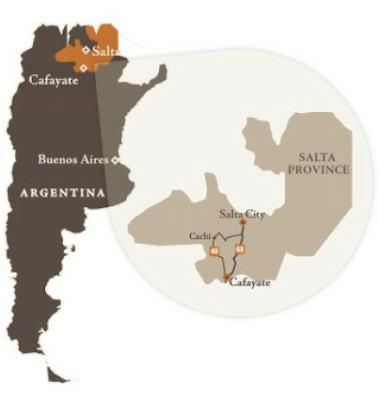
Founded in 1840 and protected by incredible red rock formations that frame the drive in from Salta, Cafayate is internationally known for its wines - of which we tasted many on this particular tour.
It is a high altitude valley, 1600 meters (5800 ft) above sea level, which offers ideal conditions for producing world-class wines, and is known for its Torrontes and Malbec which grow easily inside of the temperate climate and over 320 days of sunshine each year - something which I consider crucial to health - free, daily Vitamin D.
One of the nicest features of La Estancia is that it is just outside the city boundary of Cafayate - about a 2 minute drive from town. So, you are out-of-town, but within minutes of dozens of world-class restaurants and shops.
WHAT IS LA ESTANCIA DE CAFAYATE?
La Estancia is an ultra-modern, luxury development in Salta Province, Argentina. It was conceived by best-selling author Doug Casey (The International Man, Crisis Investing and founder of Casey Research) and partners as the quintessential retreat for discerning individuals looking for an amenities rich lifestyle in the company of a diverse community of residents from around the globe (at this point, owners come from more than 20 different countries - off the top of my head, of owners I met: Germany, Lithuania, Mexico, Romania, US, Canada...).
La Estancia de Cafayate is simply massive in size, stretching over 1,360 acres - a meandering collection of vineyards, horse pastures, and the brand new Bob Cupp links style golf course. All of the properties enjoy stunning views of the surrounding mountains, then, depending on personal tastes, also benefits from golf course or polo field frontage, or surrounding vineyards or pastures.
It will be home, upon completion, to 360 housing lots. Already 200 are sold and, in my opinion, it won’t be much longer for the rest to sell. And once they are sold, that is that. They will not be building more.
WHAT MAKES LA ESTANCIA SPECIAL?
La Estancia De Cafayate is the brainchild of Doug Casey – an avid fan and past friend of Ayn Rand – who scoured much of the world looking for the perfect place to sit out The End Of The Monetary System As We Know It (TEOTMSAWKI). According to him and his wife they spent years looking for a place that had all the right characteristics.
What characteristics?
It had to be far from “civilization”. Cafayate meets that, in that the closest large city is a thousand miles away. But that doesn’t mean it isn’t “civilized” – it is, in fact, ultra-civilized in this remote location in Salta Province. However, it should be noted, even if there were large population centers nearby, La Estancia would still be one of the safest places on Earth. Why? Nearly everyone I spoke with who intends on living in La Estancia are the type of people who consider self-defense their responsibility and not the responsibility of the state.
It also had to be fairly self-sufficient. Cafayate meets that in that it is built atop a giant aquifer where much of the Andes drains into. Water? No problem. Electricity? The power comes from hydroelectric so even in the event of serious supply chain collapse there is very little chance that the waterfalls and rivers supplying the power will come to a halt. Coal fired, natural gas and nuclear plants could see their supply of energy get cut-off for a period of time as supply chains grind to a halt – but this is very unlikely to happen to hydro plants.
As well, La Estancia is home to hundreds of acres of vineyards (which are owned by home owners in the project) – so no shortage of wine. And on or near the estate almost any and every form of agriculture and farm animals are nearby. Doug Casey, in fact, owns a very large cattle ranch just a few hours north of Salta. So, in the event of parts of the world being forced into a famine situation as supply chains seize, those at Cafayate will be dining on steak, fresh vegetables and fine wines.
Another important factor for locating La Estancia in Cafayate is that it needed to be situated in a country where government is not much more than a nuisance. Argentina fits the bill here. In fact, the ex-Governor of Salta Province is a partner in the development so, even if the government in Argentina begins to try to appropriate land or wealth from residents (something it has never done) it is highly unlikely that La Estancia de Cafayate will be targeted.
WHAT AMENITIES WILL LA ESTANCIA OFFER?
La Estancia de Cafayate has been designed from the ground up to support an incredibly rich lifestyle.
These are just a few of the amenities:
§ 60-100 hectares of shared-ownership vineyards – As a property owner you legitimately pick up bragging rights as owning a vineyard in Argentina!
§ Vintner’s Heath Golf Course – An 18-hole Bob Cupp-designed golf course with a clubhouse, driving range and short game practice facility. When completed, this will be one of the finest golf courses in all of Argentina, and even South America - and from what I understand, owners play at $12/round!
§ Authentic Argentine equestrian experience – With stabling and pasturing facilities for private and community horses.
§ Polo fields and associated facilities
§ A network of riding trails, also used for nature walks and mountain biking - as well as horse riding - many people even ride their horses into town... that's just normal for this part of the world
§ Tennis, squash, bocce & parcours facilities;
§ Heath Club – offers a bar, restaurant and asado, as well as locker rooms, a pro-shop, viewing tower, wide patios, WiFi and more.
§ Social clubhouse with all the amenities for civilized living – featuring a bar and lounge, wine cellars, game room, library (only stocked with the best in libertarian, anarcho-capitalist, austrian finance classics), cigar lounge, business center and even a poker room!
§ Full-service Spa – With multiple swimming pools, locker rooms, fitness center and treatment rooms; this is one of the most important features to me: the Gym - I spoke with Doug Casey on this and he intends to make it a world class gym! He is even likely putting in Power Plates - something I wrote up in the September Issue of TDV (Premium/Basic)
§ Kids clubhouse – With game room and more;
§ Pueblito – A small village center with asado (barbeque) cabin, small shops with crafts and conveniences, gathering and game spaces;
§ Cafayate Concierge – A dedicated staff which can help you with anything you need
COSTS
There are 3 types of lots available:
§ Chacra: 5,000-10,000 Square Meters (averaging 1.5 acres) - cost $320-$400k USD
§ Quinta: 4,000 Square Meters (averaging 1 acre) - cost $235k-$295k USD
§ Jardin: 2,000 Square Meters (averaging 1/2 acre) - cost $135k-$195k USD
Home building costs in Cafayate today range from $800 - $1300 per square meter (about $80 - $130 per square foot). As in most places, building costs do not include design and engineering, earthwork, landscaping, and furnishings. “All-in” building costs are likely to run from $1100 - $1500 per square meter (about $110 - $150 per square foot) for high quality homes that include natural stone and wood, in-floor radiant heat, high ceilings, outside verandas and gracious patios.
Annual dues are assessed to each owner to pay for the management and maintenance of all the common elements and services, including golf, vineyards, equestrian facilities, roads, landscaping, and other amenities. The current estimate for the fees is a very reasonable $3500 -$5000 per year per property. However, Doug Casey has stated that it is his intention to have the vineyard profits get those fees to as close to zero as possible.
In the meantime, at normal production levels, it is anticipated that approximately 10 - 15 cases or 60 - 90 bottles per year will be distributed to each owner. Once fully mature, the property vineyards will have the potential to produce about 550,000 bottles of wine each year.
The wine allocation to all the owners will equate to approximately 5% of the total grape production.
SCHOOLING
The schooling system in Argentina offers two options, public and private. The Elementary stage is called primary and children attend from the age of 6 to 12. The next stage is called secondary and it is attended from the age of 13 to 18.
Cafayate has 6 primary public schools, 4 secondary and 2 private schools. Private schools offer an 8-hour day with a secondary language, which is typically English.
However, of the owners I talked to who have children, nearly all do home school or plan to home school. This brings up the next topic: business opportunities.
BUSINESS OPPORTUNITIES
If you can't afford to buy a place in La Estancia and/or you need some sort of income to live there, I lost track of all the business opportunities I came up with over just a few days.
This is going to be a community of about 300 homes - and almost every person there will be well off or outright wealthy. They will need and want a multitude of specialized services.
As example, most of the families want to home school, but I am sure many of the mothers would love to have a VERY private, almost home school style school in Cafayate which only teaches the subjects the parents want their children to learn... Austrian Economics, as example.
As well, a smart young entrepreneur would be wise to go down to Cafayate, rent an apartment in the town of Cafayate itself (for $300/month or less in many cases) and spend some time surveying the landscape and talking to new owners at La Estancia about products or services they would be interested in - and then offer that to them.
Not to mention, buying real estate in the town of Cafayate will almost, without doubt, be an excellent speculative investment. Think of it like buying real estate or land in Aspen, Colorado, fifty years ago.
NEGATIVES
No place is perfect but it wasn't easy to come up with too many negatives for La Estancia:
§ Weather - While there is rarely a cloudy day in Cafayate it can definitely get chilly. It never snows but overnight there can definitely be nights where a sweater and even a jacket are needed. Many people have the misconception that most of South America is hot/tropical but this isn't the case. But if you don't mind chilly evenings and having some warm weather clothes then you'll be fine.
§ Distance - This is both a positive and a negative - depending on perspective. If one of your biggest concerns is the unforeseen risks of TEOTMSAWKI then Cafayate's distance from virtually anywhere is a big plus. However, if you see Cafayate as being a place where you might visit for a week or so from time to time, unless you live in South America plan on spending a full day (24 hours) in transit. There are two main ways to get there... through Buenos Aires or through Santa Cruz, Bolivia (onAerosur) but even once you get to Salta you still have a 3 hour drive - or another short flight. This isn't a "weekend getaway" kind of place. But, again, that can be a positive as you don't get the weekend tourist crowd
§ There is no local international school (yet)
§ Everyone at La Estancia speaks English but you will be hard pressed to find anyone in the town of Cafayate who speaks English. However, one of the best investments you can make, in my opinion, is to learn Spanish. It is one of the best languages to know, with over 20 countries that speak it and more native Spanish speakers in the world than native English speakers.
CONCLUSION
Of course, if it is Galt’s Gulch, then I am breaking one of the sacred rules - as was written in Atlas Shrugged. To liken it to Fight Club: “First rule of Galt’s Gulch, Don’t talk about Galt’s Gulch!”
However, I am so excited about this project that I am putting my money where my mouth is and buying a place there. And I recommend to anyone looking for something of this sort that you take a look ASAP. I will be surprised if there are many lots left by October/November when they are having their next big celebration.
In a recent blog post I called La Estancia, "the world's first libertarian enclave". I used the word "libertarian" because that was the best one-word label I could put on it. However, it is more than that. The people who are gravitating to La Estancia can best be described as non-conformists. They tend to be individualistic, non-statist, free-minded and free willed people who refuse to accept and live life the way they are told to live it.
This, more than anything, is why you should consider having a place there. There is no other place in the world, that I know of, where you can live amongst a group of people like this.
CONTACT
During my time at La Estancia de Cafayate I got to know virtually everyone - all the salespeople, concierges, developers and planners. They have set-up a special email just for TDV subscribers:tdv@lec.com.ar. They understand that TDV readers are going to be quite a bit more intelligent and savvy in regards to wanting a place in a spot like La Estancia than just regular off-the-street enquiries, so you'll get priority attention by contacting them through that email.
Or if you contact them directly through their website (www.laestanciadecafayate.com), just mention you heard about it from The Dollar Vigilante and they'll give you prompt attention.
Special Report: La Estancia de Cafayate
Sitting Out TEOTMSAWKI In Galt's Gulch
I accepted an invitation (all at my own expense) to go down to Doug Casey’s, La Estancia de Cafayate, in Salta Province, Argentina without quite understanding what I was about to discover. I even told friends and those who asked that, “I doubt I’ll buy a place.”
Why? For starters, I like living in larger cities – or at least not “out in the country” somewhere. I like shops, restaurants, bars and discos. And secondly, I had the complete misperception that this was some sort of typical, planned gated community. Not my style.
What I discovered has excited me so much that I am, as I write, working on purchasing a lot on which I will build a small home. As well, I am telling all my like-minded friends that if they can, they must come down and see what is being developed there.
GALT’S GULCH
It’s Galt’s Gulch. There is no better way to describe it. For those who haven’t read Atlas Shrugged, the long awaited movie based on the book is coming out next month (see the movie trailer here).
Galt’s Gulch, in the book, was a place where many of the most productive, intelligent and industrious people of the world esconded when the rest of the world was thrusting socialism/communism upon them.
The parallels to Galt’s Gulch are numerous, including the fact that Galt’s Gulch was built far away from civilization at a high altitude.
ABOUT CAFAYATE
Founded in 1840 and protected by incredible red rock formations that frame the drive in from Salta, Cafayate is internationally known for its wines - of which we tasted many on this particular tour.
It is a high altitude valley, 1600 meters (5800 ft) above sea level, which offers ideal conditions for producing world-class wines, and is known for its Torrontes and Malbec which grow easily inside of the temperate climate and over 320 days of sunshine each year - something which I consider crucial to health - free, daily Vitamin D.
One of the nicest features of La Estancia is that it is just outside the city boundary of Cafayate - about a 2 minute drive from town. So, you are out-of-town, but within minutes of dozens of world-class restaurants and shops.
WHAT IS LA ESTANCIA DE CAFAYATE?
La Estancia is an ultra-modern, luxury development in Salta Province, Argentina. It was conceived by best-selling author Doug Casey (The International Man, Crisis Investing and founder of Casey Research) and partners as the quintessential retreat for discerning individuals looking for an amenities rich lifestyle in the company of a diverse community of residents from around the globe (at this point, owners come from more than 20 different countries - off the top of my head, of owners I met: Germany, Lithuania, Mexico, Romania, US, Canada...).
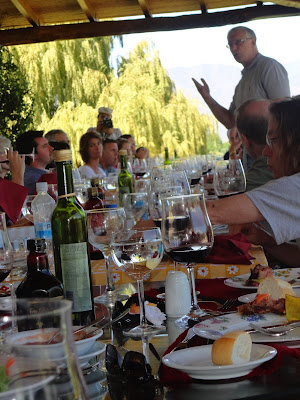
| Doug Casey speaking at La Estancia lunch |
La Estancia de Cafayate is simply massive in size, stretching over 1,360 acres - a meandering collection of vineyards, horse pastures, and the brand new Bob Cupp links style golf course. All of the properties enjoy stunning views of the surrounding mountains, then, depending on personal tastes, also benefits from golf course or polo field frontage, or surrounding vineyards or pastures.
It will be home, upon completion, to 360 housing lots. Already 200 are sold and, in my opinion, it won’t be much longer for the rest to sell. And once they are sold, that is that. They will not be building more.
WHAT MAKES LA ESTANCIA SPECIAL?
La Estancia De Cafayate is the brainchild of Doug Casey – an avid fan and past friend of Ayn Rand – who scoured much of the world looking for the perfect place to sit out The End Of The Monetary System As We Know It (TEOTMSAWKI). According to him and his wife they spent years looking for a place that had all the right characteristics.
What characteristics?
It had to be far from “civilization”. Cafayate meets that, in that the closest large city is a thousand miles away. But that doesn’t mean it isn’t “civilized” – it is, in fact, ultra-civilized in this remote location in Salta Province. However, it should be noted, even if there were large population centers nearby, La Estancia would still be one of the safest places on Earth. Why? Nearly everyone I spoke with who intends on living in La Estancia are the type of people who consider self-defense their responsibility and not the responsibility of the state.
It also had to be fairly self-sufficient. Cafayate meets that in that it is built atop a giant aquifer where much of the Andes drains into. Water? No problem. Electricity? The power comes from hydroelectric so even in the event of serious supply chain collapse there is very little chance that the waterfalls and rivers supplying the power will come to a halt. Coal fired, natural gas and nuclear plants could see their supply of energy get cut-off for a period of time as supply chains grind to a halt – but this is very unlikely to happen to hydro plants.
As well, La Estancia is home to hundreds of acres of vineyards (which are owned by home owners in the project) – so no shortage of wine. And on or near the estate almost any and every form of agriculture and farm animals are nearby. Doug Casey, in fact, owns a very large cattle ranch just a few hours north of Salta. So, in the event of parts of the world being forced into a famine situation as supply chains seize, those at Cafayate will be dining on steak, fresh vegetables and fine wines.
![]() |
| The Vineyards at La Estancia de Cafayate |
Another important factor for locating La Estancia in Cafayate is that it needed to be situated in a country where government is not much more than a nuisance. Argentina fits the bill here. In fact, the ex-Governor of Salta Province is a partner in the development so, even if the government in Argentina begins to try to appropriate land or wealth from residents (something it has never done) it is highly unlikely that La Estancia de Cafayate will be targeted.
WHAT AMENITIES WILL LA ESTANCIA OFFER?
La Estancia de Cafayate has been designed from the ground up to support an incredibly rich lifestyle.
These are just a few of the amenities:
§ 60-100 hectares of shared-ownership vineyards – As a property owner you legitimately pick up bragging rights as owning a vineyard in Argentina!
§ Vintner’s Heath Golf Course – An 18-hole Bob Cupp-designed golf course with a clubhouse, driving range and short game practice facility. When completed, this will be one of the finest golf courses in all of Argentina, and even South America - and from what I understand, owners play at $12/round!
§ Authentic Argentine equestrian experience – With stabling and pasturing facilities for private and community horses.
§ Polo fields and associated facilities
§ A network of riding trails, also used for nature walks and mountain biking - as well as horse riding - many people even ride their horses into town... that's just normal for this part of the world
§ Tennis, squash, bocce & parcours facilities;
§ Heath Club – offers a bar, restaurant and asado, as well as locker rooms, a pro-shop, viewing tower, wide patios, WiFi and more.
§ Social clubhouse with all the amenities for civilized living – featuring a bar and lounge, wine cellars, game room, library (only stocked with the best in libertarian, anarcho-capitalist, austrian finance classics), cigar lounge, business center and even a poker room!
§ Full-service Spa – With multiple swimming pools, locker rooms, fitness center and treatment rooms; this is one of the most important features to me: the Gym - I spoke with Doug Casey on this and he intends to make it a world class gym! He is even likely putting in Power Plates - something I wrote up in the September Issue of TDV (Premium/Basic)
§ Kids clubhouse – With game room and more;
§ Pueblito – A small village center with asado (barbeque) cabin, small shops with crafts and conveniences, gathering and game spaces;
§ Cafayate Concierge – A dedicated staff which can help you with anything you need
COSTS
There are 3 types of lots available:
§ Chacra: 5,000-10,000 Square Meters (averaging 1.5 acres) - cost $320-$400k USD
§ Quinta: 4,000 Square Meters (averaging 1 acre) - cost $235k-$295k USD
§ Jardin: 2,000 Square Meters (averaging 1/2 acre) - cost $135k-$195k USD
Home building costs in Cafayate today range from $800 - $1300 per square meter (about $80 - $130 per square foot). As in most places, building costs do not include design and engineering, earthwork, landscaping, and furnishings. “All-in” building costs are likely to run from $1100 - $1500 per square meter (about $110 - $150 per square foot) for high quality homes that include natural stone and wood, in-floor radiant heat, high ceilings, outside verandas and gracious patios.
Annual dues are assessed to each owner to pay for the management and maintenance of all the common elements and services, including golf, vineyards, equestrian facilities, roads, landscaping, and other amenities. The current estimate for the fees is a very reasonable $3500 -$5000 per year per property. However, Doug Casey has stated that it is his intention to have the vineyard profits get those fees to as close to zero as possible.
In the meantime, at normal production levels, it is anticipated that approximately 10 - 15 cases or 60 - 90 bottles per year will be distributed to each owner. Once fully mature, the property vineyards will have the potential to produce about 550,000 bottles of wine each year.
The wine allocation to all the owners will equate to approximately 5% of the total grape production.
SCHOOLING
The schooling system in Argentina offers two options, public and private. The Elementary stage is called primary and children attend from the age of 6 to 12. The next stage is called secondary and it is attended from the age of 13 to 18.
Cafayate has 6 primary public schools, 4 secondary and 2 private schools. Private schools offer an 8-hour day with a secondary language, which is typically English.
However, of the owners I talked to who have children, nearly all do home school or plan to home school. This brings up the next topic: business opportunities.
BUSINESS OPPORTUNITIES
If you can't afford to buy a place in La Estancia and/or you need some sort of income to live there, I lost track of all the business opportunities I came up with over just a few days.
This is going to be a community of about 300 homes - and almost every person there will be well off or outright wealthy. They will need and want a multitude of specialized services.
As example, most of the families want to home school, but I am sure many of the mothers would love to have a VERY private, almost home school style school in Cafayate which only teaches the subjects the parents want their children to learn... Austrian Economics, as example.
As well, a smart young entrepreneur would be wise to go down to Cafayate, rent an apartment in the town of Cafayate itself (for $300/month or less in many cases) and spend some time surveying the landscape and talking to new owners at La Estancia about products or services they would be interested in - and then offer that to them.
Not to mention, buying real estate in the town of Cafayate will almost, without doubt, be an excellent speculative investment. Think of it like buying real estate or land in Aspen, Colorado, fifty years ago.
NEGATIVES
No place is perfect but it wasn't easy to come up with too many negatives for La Estancia:
§ Weather - While there is rarely a cloudy day in Cafayate it can definitely get chilly. It never snows but overnight there can definitely be nights where a sweater and even a jacket are needed. Many people have the misconception that most of South America is hot/tropical but this isn't the case. But if you don't mind chilly evenings and having some warm weather clothes then you'll be fine.
§ Distance - This is both a positive and a negative - depending on perspective. If one of your biggest concerns is the unforeseen risks of TEOTMSAWKI then Cafayate's distance from virtually anywhere is a big plus. However, if you see Cafayate as being a place where you might visit for a week or so from time to time, unless you live in South America plan on spending a full day (24 hours) in transit. There are two main ways to get there... through Buenos Aires or through Santa Cruz, Bolivia (onAerosur) but even once you get to Salta you still have a 3 hour drive - or another short flight. This isn't a "weekend getaway" kind of place. But, again, that can be a positive as you don't get the weekend tourist crowd
§ There is no local international school (yet)
§ Everyone at La Estancia speaks English but you will be hard pressed to find anyone in the town of Cafayate who speaks English. However, one of the best investments you can make, in my opinion, is to learn Spanish. It is one of the best languages to know, with over 20 countries that speak it and more native Spanish speakers in the world than native English speakers.
CONCLUSION
Of course, if it is Galt’s Gulch, then I am breaking one of the sacred rules - as was written in Atlas Shrugged. To liken it to Fight Club: “First rule of Galt’s Gulch, Don’t talk about Galt’s Gulch!”
However, I am so excited about this project that I am putting my money where my mouth is and buying a place there. And I recommend to anyone looking for something of this sort that you take a look ASAP. I will be surprised if there are many lots left by October/November when they are having their next big celebration.
In a recent blog post I called La Estancia, "the world's first libertarian enclave". I used the word "libertarian" because that was the best one-word label I could put on it. However, it is more than that. The people who are gravitating to La Estancia can best be described as non-conformists. They tend to be individualistic, non-statist, free-minded and free willed people who refuse to accept and live life the way they are told to live it.
This, more than anything, is why you should consider having a place there. There is no other place in the world, that I know of, where you can live amongst a group of people like this.
CONTACT
During my time at La Estancia de Cafayate I got to know virtually everyone - all the salespeople, concierges, developers and planners. They have set-up a special email just for TDV subscribers:tdv@lec.com.ar. They understand that TDV readers are going to be quite a bit more intelligent and savvy in regards to wanting a place in a spot like La Estancia than just regular off-the-street enquiries, so you'll get priority attention by contacting them through that email.
Or if you contact them directly through their website (www.laestanciadecafayate.com), just mention you heard about it from The Dollar Vigilante and they'll give you prompt attention.
Saturday, March 19, 2011
Subscribe to:
Posts (Atom)